
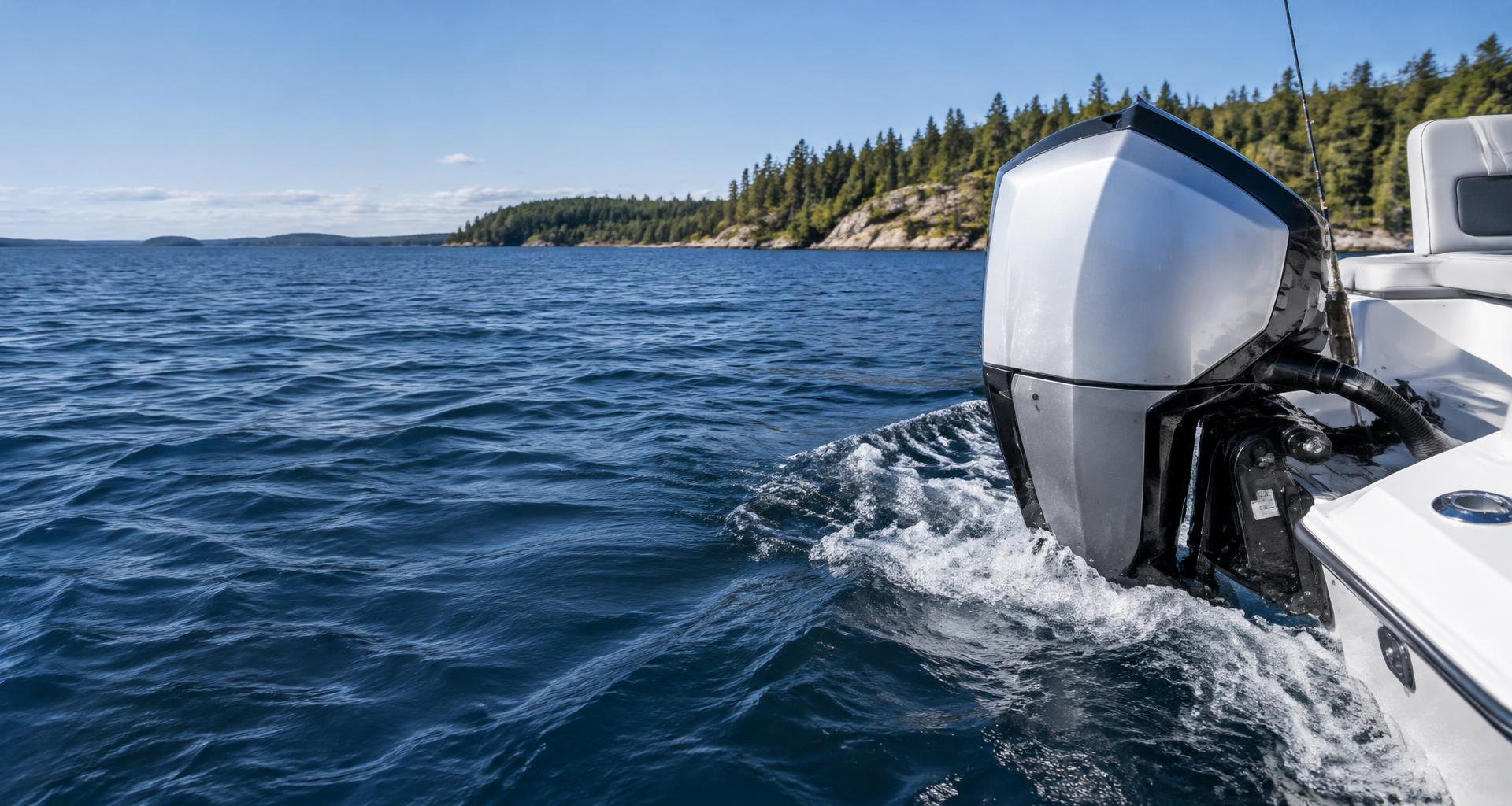
How to Winterize an Outboard Motor
Step-by-step outboard winterizing checklist for Canadian boatowners: fuel stabilizer, oil change, fogging, draining water, gearcase oil and battery storage.
Winterizing takes an hour or two and prevents the two failures that end outboards early: water frozen inside the powerhead and ethanol fuel that has gone stale in the tank. Do it before the first hard frost, not after the boat is already in storage.
- Winterize before the first hard frost — usually October or early November in southern Ontario.
- Treat the fuel with stabilizer and run the engine so it reaches the injection or carburetion system.
- Change the oil while warm; used oil holds acid and moisture that pit bearings over winter.
- Drain every pocket of water: fuel filter separator, gearcase, and any water in the block.
- If you are unsure about a step, the manufacturer’s manual for your exact model is the authority.
1. Stabilize the fuel, then run it through
Ethanol-blended gasoline starts absorbing water and losing combustibility within weeks, and a motor that will sit for five months is the classic casualty. Fill the tank first — a nearly empty tank sweats condensation all winter — then add fuel stabilizer to the tank at the rate on the stabilizer label and run the engine for ten to fifteen minutes so treated fuel replaces untreated fuel in the lines, filter and injection or carburetion system. On direct-injection engines, running the engine is what circulates the treated fuel, so do not skip it.
2. Change the oil while the engine is warm
Warm oil drains freely and carries suspended contaminants out with it; cold oil leaves them behind. Run the engine for a few minutes to warm the oil, then drain it and replace the oil filter. Check what came out: a milky, coffee-with-cream colour means water has entered the oil, which is a diagnosis worth acting on before storage rather than in spring.
3. Fog the cylinders
The goal is a film of oil on the cylinder walls so they do not rust while the motor sits. On most four-strokes that means spraying fogging oil into the intake or into the spark plug holes, then reinstalling the plugs. Many two-strokes are protected by mixing fogging oil into the fuel and running it in. Procedures differ by model, so follow the method in your manufacturer’s manual and use the plug and wire handling it specifies.
4. Drain every pocket of water
Water is what actually cracks a block. After flushing with fresh water following salt or lake use, tip the motor so water leaves the powerhead, lower the unit if the boat is on a trailer, and drain the fuel filter and water separator into a container. Confirm the anti-ventilation plate and gearcase are not sitting in a puddle of trapped water in the boat.
- Flush with fresh water if the motor ran in salt or brackish water.
- Drain the fuel filter and water separator — the usual first source of spring starting trouble.
- Leave the motor tilted or trimmed so water drains out rather than settling in.
- Do not store a motor with water standing in a block or manifold.
5. Gearcase oil, grease and sacrificial zincs
Change the gearcase oil at both ends of the lower unit; gearcase oil that comes out milky tells you a seal has failed and water is getting in. Re-grease the swivel and pivot points so the tilt and trim mechanism does not seize, and inspect the sacrificial anodes. Anodes that are more than half wasted should be replaced before the next season, not after.
6. Battery, controls and cover
Pull the battery, charge it fully and store it on a maintainer in a dry place away from freezing, or accept a shortened battery life. Work the steering and shift controls through their range and check the terminals. Cover the motor with something breathable; a plastic tarp that traps moisture does more harm than good, and a closed engine compartment invites condensation and rodents.
What winterizing does not cover
Winterizing is maintenance, not warranty work. Outboards sold here carry the applicable manufacturer’s warranty only, and warranty obligations are limited to what that manufacturer’s printed literature or website describes. Repairs run through authorized dealer networks, and inspection or repair can require transporting the motor to a service center at the purchaser’s cost. Identify your closest authorized service center before you need it.
Questions boaters ask
Do I have to winterize a four-stroke outboard?
Yes. Four-strokes have the same two enemies as two-strokes: water left in the powerhead and ethanol fuel that goes stale. The oil and fogging steps differ by model, but the need is the same.
Can I skip winterizing if I use the boat through fall?
If the motor is used often and kept from freezing, you can delay storage work, but stale ethanol fuel and condensation still build up. Winterize as soon as you stop using the boat.
Should I winterize it myself or have it done?
Either works if the job is done completely. A DIY winterizing takes an hour or two on a small motor and longer once gearcase oil, anodes and battery work are added. Northern Marine offers servicing and maintenance support — contact us to discuss your motor and current service availability.
THE RIGHT MOTOR. THE RIGHT SUPPORT.
Let’s find the outboard that fits your boat and your next adventure.